Out of long, gloomy winters,
The winters of the past,
Oh, blow for the Armenians,
And bring us spring at last!
Khoren Nar-Bey De Lusignan
by Davur Dordzhiev, MA in European Studies
The results of the June 2026 Armenian parliamentary elections may go on to shape the destiny of Armenian statehood for decades to come. During this parliamentary term, Armenians expect the signing and ratification of a peace agreement signed by Prime Minister Nikol Pashinyan and Azerbaijani President Ilham Aliyev at the Washington DC summit hosted by US President Donald Trump. Simultaneously, Armenians’ discontent with Pashinyan and his policies grows despite favourable results for the Civil Contract–Pashinyan’s political party. The Strong Armenia–led by a political novice Samvel Karapetyan who holds strong connections to Russia’s high-ranking politicians and major corporations–has secured the second place and will form the largest opposition faction in the National Assembly of Armenia. In this article, I will give political profiles on two major political figures in Armenia right now: Nikol Pashinyan and Samvel Karapetyan. It is essential to dissect their views on internal and foreign affairs, including Armenia’s European integration. I will also explore in-depth possible explanations on why the Civil Contract gained the majority of seats in Parliament. The Civil Contract has exceeded their 2021 results by roughly 39,000 votes despite clear decline in confidence in the Cabinet and Prime Minister personally. Lastly, this paper offers guidance on how the European Union could facilitate Armenia’s alignment with the EU by tackling clear deficiencies in Armenia’s democratic and economic systems.
Samvel Karapetyan: From Russia with “Strength”
Samvel Karapetyan (60) is a real estate mogul in Russia who owns a set of major companies in Armenia, including the food chain Tashir Pizza. Born in Tashir, Soviet Armenia, Karapetyan started his business endeavors in Russia during the 90s and gradually turned his small construction business into Tashir Group: a major multi-industry holding with ties to Gazprom and Sergei Sobianin, who is the Mayor of Moscow and one of Vladimir Putin’s closest apparatchiks. Karapetyan holds Armenian, Russian, and Cypriot citizenship, which impeded his candidacy for the Prime Minister’s office, according to the Constitution of Armenia. In his stead, Narek Karapetyan–his nephew and vice-president at Tashir Group–was a top candidate on the Strong Armenia’s electoral list.

Mount Ararat
In 2014, Karapetyan described his managerial style as “manual control” and backed a family-owned model of Tashir Group businesses. It is worth noting that, in an interview given in 2021, Samvel Karapetyan expressed his lack of interest in politics and stated he had a “working relationship” with the Government of Armenia led by Nikol Pashinyan. In 2025, in a speech at the Association of Armenian Entrepreneurs forum in Moscow, Karapetyan argued that Armenia should not “put in danger strategic interests and economic stability” while deepening relations with the European Union. He also backed Armenia’s Eurasian Economic Union (the EAEU) membership, as well as favoured Russia’s energy supplies to Armenia.
In 2025, Karapetyan voiced his dissent with Pashinyan’s politically motivated attack on Karekin II, the Catholicos of Armenian Apostolic Church. This led to Karapetyan’s arrest on charges of inciting actions against state authority. In prison, he declared his intention to start his political party Strong Armenia on an opposition and nationalist platform to counter Pashinyan’s alleged anti-national policies. The Electric Network of Armenia (the ENA), an electric energy distribution monopoly owned and managed by Tashir Group since 2015, was handed over under the interim administration formed by the Cabinet. This move triggered an arbitration proceedings on the alleged foreign direct investment rights infringement before the Stockholm Arbitration Court. Later on, Karapetyan was charged with tax evasion, money laundering, and fraud on a large scale. He continues to deny all accusations against him and intends to regain control over the ENA.
The Insider, an internationally acclaimed investigative media group, revealed that Karapetyan’s passport file listed the FSB Information Center under “place of work”. According to The Insider, this indicates that Karapetyan may have been a confidential informant or have worked under the FSB supervision. Samvel Karapetyan adamantly denies this accusation as a fabrication created at the command of his political rival Nikol Pashinyan.
Hailed by his supporters and political allies as a “strong leader”, Samvel Karapetyan centered his campaign around the resettlement of 300,000 ethnic Azerbaijanis in Armenia, a revisionist claim publicly endorsed by Ilham Aliyev, an Azerbaijani nationalist strongman. In the view of Karapetyan, Nikol Pashinyan’s policies of appeasement will inevitably lead to the implementation of this alleged plan, which will detriment the future of Armenia. Meanwhile, Karapetyan proposed to create 300,000 jobs to employ Armenian workers, abolish taxes for small enterprises, and build large-scale industrial plants to stimulate the economic growth in Armenia. Karapetyan criticises the Cabinet for creating “geopolitical turmoil” around Syunik, a southern region of Armenia which has borders with Iran. In his view, Armenia should not have hosted the European Political Summit because this move goes against Armenia’s “brotherly relations” with Russia. Instead, Armenia should focus on its own national interests and refrain from European integration if this agenda upsets the regional balance. Nevertheless, Karapetyan promised to uphold the Trump Route for the International Peace and Prosperity (TRIPP) agreement on the establishment of a transport corridor through Syunik from Azerbaijan to its exclave Nakhichevan and Turkey. This agreement was signed by Pashinyan and the US President Donald Trump at the Washington DC peace summit, but Pashinyan expressed his intention to “modify arrangements”. The Strong Armenia “top dog” opines that Armenia’s national security can be guaranteed by the US, Russia, and China–also known as the three “world centers of force”—in addition to the EU, should “the Union so desires”.
Since the Voting Day, Samvel Karapetyan–who repeatedly referred to himself as the “next Prime Minister of Armenia”–has not conceded defeat in the elections. Narek Karapetyan, the official number one candidate on the Strong Armenia list, has urged his voters to wait until it becomes clear whether the Prosperous Armenia political party, chaired by flamboyant tycoon Gagik Tsarukyan (69), has crossed the threshold of 4% of votes. As of today, there is no credible information about whether the Strong Armenia is set to give up their mandates and focus on extra-parliamentary methods of the opposition struggle. Formally, the Karapetyans’ political team has garnered roughly 23.3% of votes and has the right to form the largest opposition faction in the Parliament.
Nikol Pashinyan: Peacebuilding through Fearmongering
Nikol Pashinyan (51) sought reelection as the Prime Minister of Armenia in the context of heated internal debates over national security and identity, which is deeply rooted in Christianity, the 1915 Armenian Genocide perpetrated by the Young Turks regime in the former Ottoman Empire, and the idea of unification with Karabakh (Artsakh), which is internationally regarded as a part of Azerbaijan, but historically populated by ethnic Armenians until their forceful displacement in 2023.
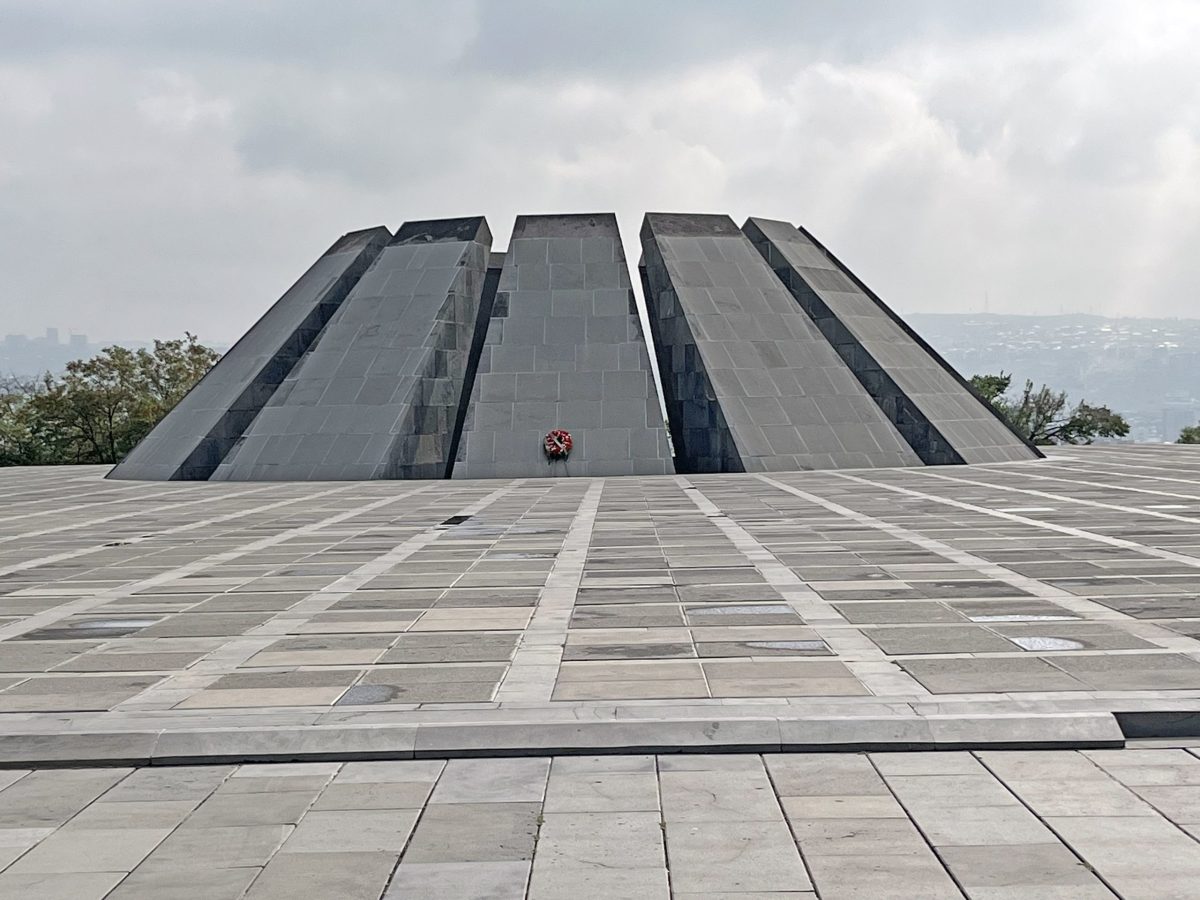
Genocide Memorial
Pashinyan has promised to present a new Constitutional draft that will be void of any references to the Declaration of Independence. At the dawn of Armenia’s restored independence from the Soviet Union, the country vowed to pursue the international recognition of the Armenian Genocide and the annexation of Karabakh. These formulas have been a stumbling block for Armenia’s tangled relationship with Turkey and Azerbaijan, whereas both nations unequivocally have been denying the 1915 Genocide and rejecting the very idea of Karabakh’s self-determination.
As for State-Church relations, in 2025, Pashinyan quarreled with the Catholicos Karekin II, accusing him of having an illegitimate child. The argument escalated rapidly into a full-scale civic conflict between the Government and the Armenian Apostolic Church. Several archbishops aligned themselves with Pashinyan while the others remained loyal to Karekin II. The Investigative Committee opened a number of criminal cases against the churchmen, who were vocal critics of Pashinyan. In addition, the Prime Minister voiced his intentions to tax the Church and gain control over its real estate property.
During his term, a string of tragic events, including the Fall of Karabakh following the blitzkrieg attack of Azerbaijani military forces in September 2023, the influx of Armenian refugees from Karabakh to Armenia, and related political unrest, led to a sharp drop in the rating of Pashinyan’s approval. Russia’s apparent failure to protect Armenia and Karabakh in violation of all agreements coupled with Pashinyan’s political bet on the rapprochement with Turkey and Azerbaijan, resulted in the initialing of the peace agreement with Ilham Aliyev in Washington DC in August 2025 amongst the presence of Donald Trump.
Often labeled as a pro-European politician, Pashinyan, conversely, has repeatedly stated his Cabinet’s desire to intensify economic ties with Russia and the EAEU, as long as Armenia does not join the EU as a full-scale member within the next 20 years. Under Pashinyan, Armenia’s energy dependence on Russia–the foundations of which were laid by former President Robert Kocharyan (71)–has worsened, as around 80% of total energy supply belongs to Gazprom, the sole owner of Armenia’s gas distribution system. Since the beginning of the full-scale war between Russia and Ukraine, the Armenian economy has served as a haven for imports of goods to Russia. Armenia’s stable economic growth is achieved largely due to bilateral trade with Russian entities. Armenia’s exports of agricultural products, including flowers, berries and vegetables, have been relying on Russian markets, until Vladimir Putin, ahead of the Election Day in Armenia, started a trade war with Yerevan, in which he imposed a range of poorly motivated economic restrictions on Armenian goods. There is an apparent will of Armenians to establish closer ties with the EU as shown by the formulation of the EU Accession Act, which was adopted by the Parliament in 2025 at the initiative of civic society groups and pro-European extraparliamentary political figures. Despite such pro-European sentiments, Prime Minister Pashinyan still has not secured an association agreement with the EU, dealing with the Comprehensive and Enhanced Partnership Agreement (the CEPA), which was elaborated to a larger extent during former President Serzh Sargsyan’s term.
Armenian authorities have been flirting with the Trump Administration, making deals on rare earth metals and AI. While these trade deals may look good on paper, they may create an economic bubble. Pashinyan seems to heavily rely on President Trump as a major ally in terms of international peace, security, and economic development, but these expectations are in threat of falling short since the White House is likely to shift focus to Midterm Elections this November, resulting in a loosened grip on the international scene. Inter alia, Armenia joined the Board of Peace, an international coalition chaired by Trump, which he established to assume the role of the United Nations in the global peace process.
Pashinyan’s electoral campaign used the motto “Safeguard the Peace” to position himself as a personification of the peace agenda. By fueling political polarisation, Pashinyan labeled his political nemeses as a “three-headed war party”, referring to Samvel Karapetyan, the former President Robert Kocharyan, and Gagik Tsarukyan. Through demonizing his foes as ardent supporters of war actions, the Civil Contract’s top candidate overtly warned his compatriots that the “three-headed war party” would push Armenia into another round of military confrontation with Azerbaijan, which would put a permanent end to Armenia’s sovereignty. In the course of his political campaign, Prime Minister Pashinyan flinged accusations of having close ties with the “fake elites of Karabakh” at Artur Osipyan, a Russia-wary civic activist and refugee. Subsequently, Osipyan was charged with hooliganism, obstruction of campaign activities, and incitement of violence. Osipyan was on a multi-week hunger strike and his health is reported to have severely deteriorated. Several NGOs and human rights centres vouched for his release from custody, which took place on June 10, 2026.
Incumbent’s (In)decisive Victory
Every cloud has a silver lining, and it is also necessary to recognize that due to the number of crucially important reforms that have been implemented in Armenia since the 2018 Velvet Revolution, which has produced a positive effect on economic and public governance. For instance, the state budget is now administered in a more effective manner and tax collection has been improved. This has allowed the Cabinet to promote popular social reforms, including a universal healthcare system that was introduced in January 2026. Social infrastructure czars appointed by Pashinyan have opened a number of school buildings, healthcare clinics, roads in Yerevan, and regional centres, thereby using economic populism to garner votes in the countryside and among senior citizens.
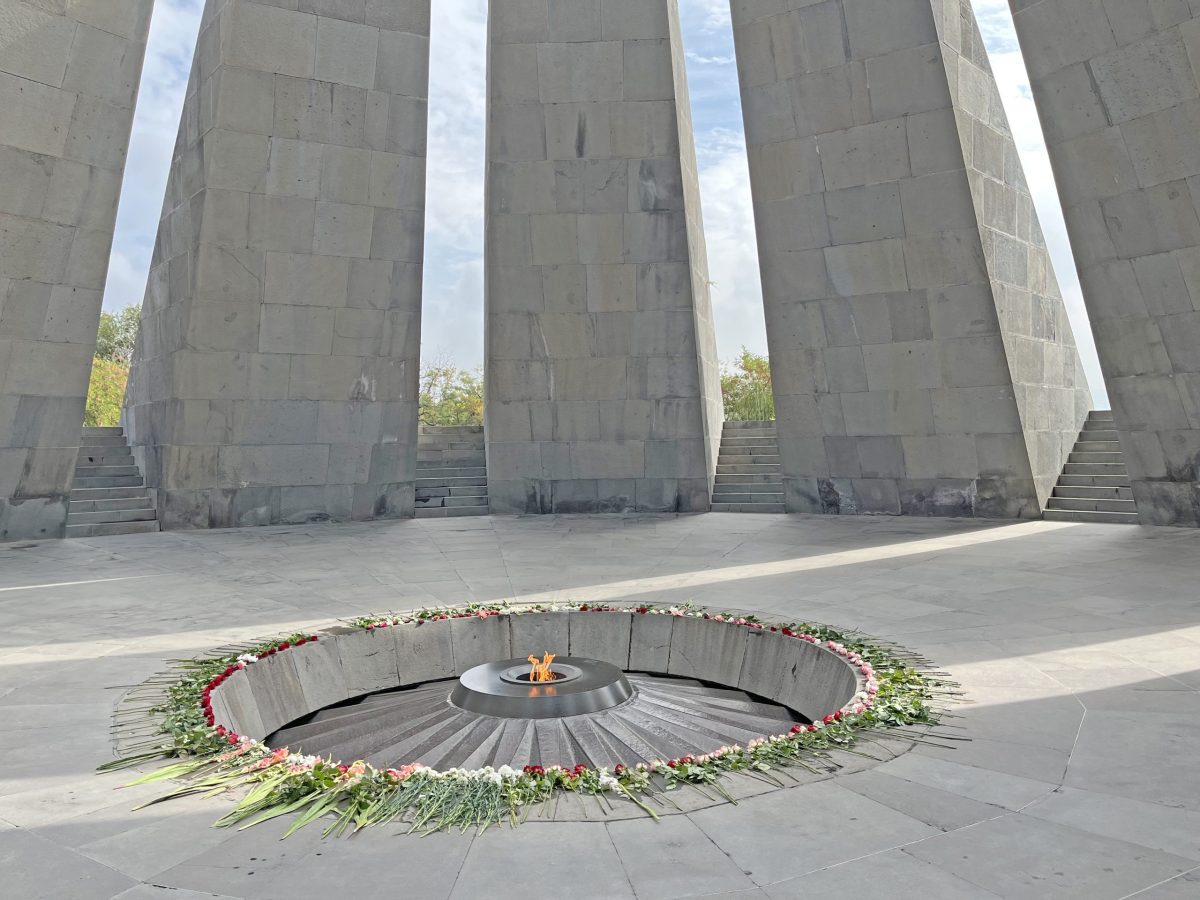
Genocide Memorial inside
After the collapse of a previous national security system built around a special relationship with Russia and the Collective Security Treaty Organization (the CSTO), the Cabinet started to implement the so-called ‘diversification policy’ aimed at what Pashinyan evaluates as “dependency on many”. While Armenia curbs its activities within the CSTO decision-making bodies, Yerevan does not cancel its full-fledged membership. In terms of the Russo-Ukrainian War, Prime Minister Pashinyan has repeatedly declared his government’s unwillingness to overtly support Russia in its unprovoked aggression against Ukraine. Armenia distances itself from the military actions conducted by the Russians and even provides humanitarian aid to Ukrainian communities. Armenia has manifested its intention to get closer with the EU, which seems to infuriate the Kremlin.
The Armenia-Turkey rapprochement holds a special position in Pashinyan’s recent policymaking. The Cabinet has held intensive talks with Ankara to open borders closed by Turkey in early 90s against the backdrop of the First Karabakh War and to restore regional connectivity between Azerbaijan, Armenia, Turkey, and Georgia. Recep Erdoğan, a Turkish nationalist autocrat, has gained the upper hand in the context of regional balance by positioning himself as a key decision-maker in the South Caucasus. Throughout decades of his unlimited government, Erdoğan has unequivocally backed Ilham Aliyev in the Karabakh conflict, provided Azerbaijan with military and diplomatic support, and basically secured Azerbaijan’s victory over Armenia and Karabakh. The Turkish President has endorsed the initialing of the Azerbaijan-Armenia peace agreement and insists on the implementation hereof, whereas the TRIPP–often referred to as the Zangezur Corridor in Turkish and Azerbaijani media lexicon–ensures the implementation of the Middle Corridor between Europe and Central Asia via Turkey. This transport connection promises to substantially shorten the time and expenses for goods movement in Eurasia and may generate profits for the Turkish economy. Pashinyan has endorsed the Middle Corridor as a once-in-a-lifetime opportunity for the Armenian economy to become the “Crossroads of Peace”, earn transit fees, and fully integrate into a larger macroeconomic infrastructure.
Unsurprisingly, US and European leaders expressed their full political support of Pashinyan’s foreign policy steps on the threshold of the parliamentary elections. French President Emmanuel Macron, one of the most popular international politicians in Armenia, paid a visit to Armenia and personally vouched for Pashinyan as a close partner and friend of France before Armenian voters in Gyumri, Armenia’s second largest city. Trump and J.D. Vance–US Vice-President and feasible Republican Party top presidential candidate–also endorsed the Civil Contract top dog and urged Armenian voters to support Pashinyan as Trump’s friend. It goes without saying that the international recognition Pashinyan achieved during the electoral campaign was a wake-up call for pro-Western voters in Armenia to support the Civil Contract, and not their opponents.
Although these elections were marred by mass bribery of voters and misuse of administrative resources, the results generally reflect national consensus on the state of affairs. Samvel Karapetyan and other opposition figures failed to convince voters that they are capable of moving the nation into a more adequate direction than Pashinyan and the Civil Contract. It is worth mentioning that the Strong Armenia’s proposals on the foreign affairs essentially came down to the same diversification policies adjusted for the re-integration into the Russia-backed political and economic structures. Therefore, Armenian voters see Pashinyan’s agenda as a lesser evil and support the status quo. In other terms, the Civil Contract was able to turn the tide of the electoral campaign and transform the voting into a referendum on Samvel Karapetyan as a new opposition leader. The political newcomer failed this crucial exam.
Nevertheless, the Civil Contract has not exceeded the psychologically important mark of 50% + 1 vote, having garnered only 49.9%. Although the Civil Contract has enough seats to form the Cabinet and to adopt ordinary laws solely, the lack of a decisive victory will be most certainly exploited by the opposition factions, especially when it comes to matters of a new Constitution draft and implementation of the Peace agreement with Azerbaijan. The matter of settlements that Azerbaijan claims as its enclaves within the territory of Armenia hangs like a sword of Damocles over Armenian statehood as well as national security and greatly concerns Armenians in Armenia and the Diaspora. The political upheaval around these issues serves as fertile ground for fearmongering narratives voiced by opposing sides in the Armenian political field. In this unhealthy political environment, any governmental reform, including European integration efforts, may be met with mistrust.
Key Recommendations for European Advocates for Armenia
Armenia needs open EU markets. No country can fully embrace the values of the European Union, if the markets hereof are closed, and unimpeded movement of goods, capital and persons is not established. Armenia, a landlocked nation heavily reliant on Russia’s imports of gas and grain, will not be able to break away from the Russian markets and the EAEU if there will be no free trade area between the EU and Armenia. As for Armenia’s exports, the European Commission should be commended for their efforts to temporarily lift tariff and non-tariff barriers on Armenian flowers, berries, and alcohol banned in Russia. These good practices can be extended to other exports from Armenia without undermining European producers and their business interests.
Although Vladimir Putin has been introducing severe anti-immigration policies–which has terribly damaged Russian businesses in the context of a dire need for a labour force–Armenians largely continue to work and study in Russia due to the well-established unified economic regime set out by the EAEU regulations.
The EU has to keep a strict eye on Pashinyan’s policies. Although Armenia has been a champion of human rights protection in the South Caucasus, there were reported cases of alleged flagrant human rights violations during the electoral campaign, including the persecution of Artur Osipyan. Nikol Pashinyan’s politically biased and, at some point, hateful rhetoric used in his attacks against opposition politicians, acting judges, the Judiciary, and the High Clergy, has a freezing effect on inclusive public debate and emerges as an obstacle for internal viewers to perceive Armenia’s undeniable progress in the strengthening of democratic foundations.
The European decision-makers may recall the example of Mikheil Saakashvili, former President of Georgia, who consolidated power in his own hands and eventually lost general elections to Bidzina Ivanishvili, another strongman with ties to Gazprom, Vladimir Putin’s personal multi-billion asset. To a great extent, Georgia finds itself in a limbo under the Georgian Dream political party and deliberately sabotages its European integration process due to the fact that the EU dealt with President Saakashvili as an undisputed champion of Georgia’s European integration disregarding Mikheil Saakashvili’s dubious record in terms of human rights and completely ignoring other pro-European political forces.
Nikol Pashinyan’s political maneuvering with Russia, China, and BRICS countries should be the main focus for European policymakers. If these tendencies continue to take shape, Armenia is likely to get lost on its pathway to the EU and make a U-turn to the EU-scepticists camp. This outcome appears to be extremely dangerous, should we bear in mind the developments in neighbouring Georgia. The EU could make a greater commitment to Armenia’s national security and strip opponents in Armenia of emotionally charged arguments that the United Europe cannot guarantee the preservation of the Armenian nation. Azerbaijan has to be compelled to uphold international obligations under the United Nations Charter, whereas Turkey should act as a rational and restrained party, not a co-sponsor of military confrontations.
EU direct investments today mean mutual profits tomorrow. Armenia’s manufacturing capabilities have significant restrictions caused by reliance on Russia. Gazprom owns the Armenian national gas distribution system Rusal that is controlled by oligarch Oleg Deripaska and holds a monopoly position in aluminum foil mill production. Metsamor nuclear power plant is managed by Rosatom, a Russian state corporation directly overseen by Vladimir Putin’s top aide, Sergei Kirienko. Zangezur Copper-Molybdenium Combine operating in Syunik remains under the effective control of Roman Trotsenko, another Russian oligarch who co-sponsors Russia’s war machine. In these circumstances, Russia has complete freedom of action in terms of the Armenian economy and has leverage to impose Vladimir Putin’s will on Armenian state apparatus and overturn Armenia’s accession to the EU.
To address Yerevan’s energy dependence on Russia, the EU could fund the Green transition program in Armenia, exploring possibilities to reduce natural gas consumption in favour of renewables, namely solar and wind energy sources. As of 2026, solar energy holds approximately 10% of Armenia’s energy balance. If this figure is substantially increased, the energy blackmail will no longer be a card in Vladimir Putin’s hands.
As a continuation of economic reforms promoted in Armenia within the CEPA commitments, the EU could actively invest in Armenia’s manufacturing assets, securing its economic independence from Russia in the near future. Institutional reforms implemented by the Cabinet, creation of a good business climate, and ease of doing business in Armenia establish a comprehensive institutional framework for foreign investors. The EU could earn a special place among Armenia’s most valuable trade partners and investors as well as build strong economic ties between European and Armenian markets, paving the way to Armenia’s EU future membership.

